Writer Faith Seci reflects on their experiences of invisible disability and the struggle for self-acceptance for Invisible Disability Week 2026.
The scrutiny I face as a young woman with ‘invisible’ disabilities can feel endless. Whether it be misunderstanding or utter denial, I am constantly coming up short of what society expects of me and my body. I guess it’s in the name — invisible. The constant self-advocacy to make sure I receive the patience and accessibility I need is exhausting. It’s hard not to internalise. And yet, I also feel lucky at times. I am surrounded by people who get it. My mum wears her sunflower lanyard proudly, and I always have a sympathetic ear when I need one.
I’ve been disabled my whole 22 years of life, but it was only recently that I truly understood and accepted this. At 14, I had my first surgery, of which there have now been three. I’ve earned my stripes, as they say. I am routinely bedbound and housebound and have more doctor’s appointments in my calendar than anything else.
It didn’t always feel so all-encompassing. Against all odds, I graduated high school, got into the degree of my dreams, and spent a year travelling and working abroad. I walked for eight hours a day, dragging a backpack way too heavy for me around countless cities. I was invincible, until I wasn’t.
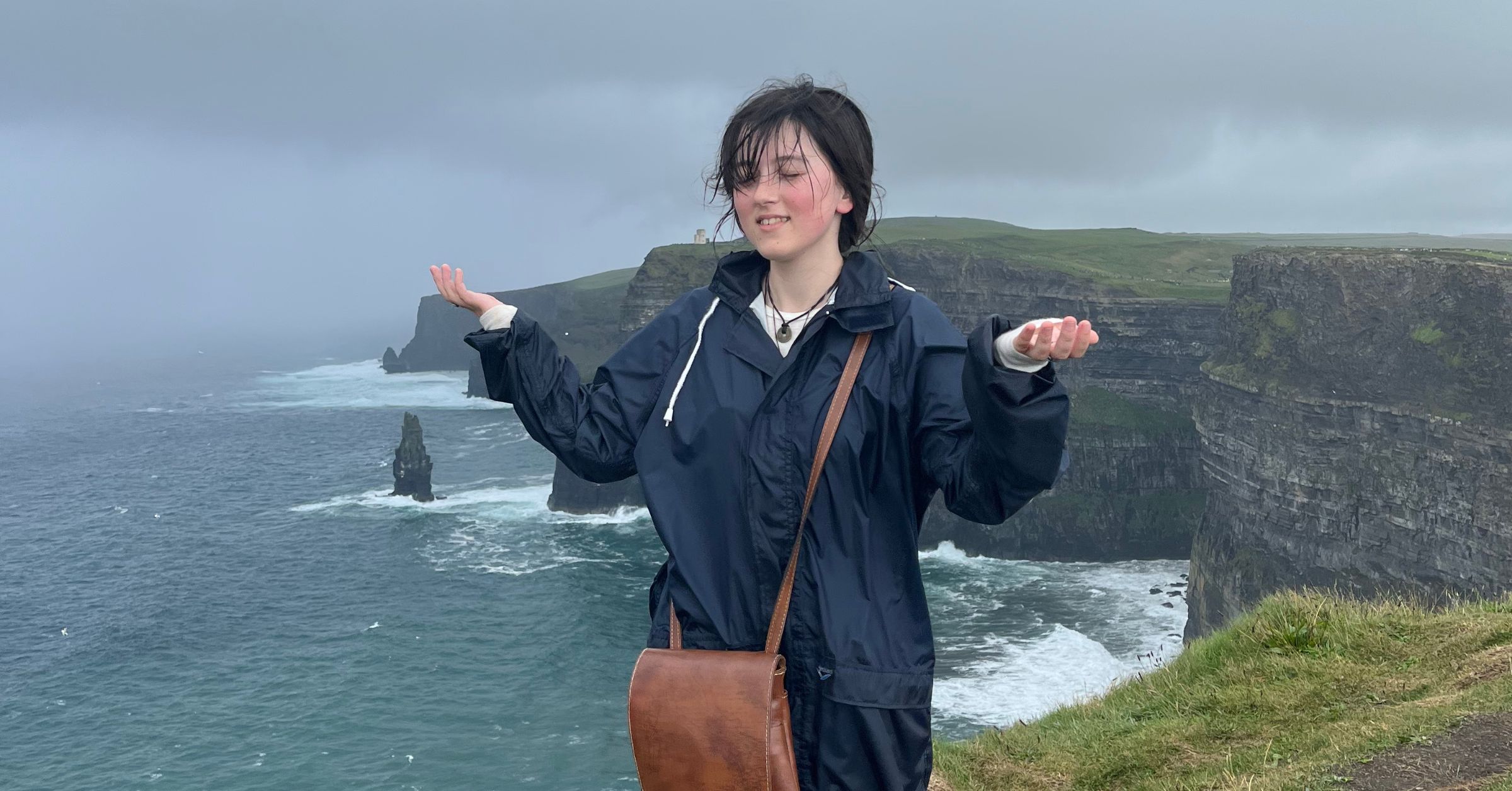
Shortly after this gap year I spent six months leaving the house maybe once a week. My Instagram posts and camera roll spoke to a life well lived, and yet, I was wrecked. It’s part and parcel of invisible disability; people see the moments when you’re out travelling, working or enjoying yourself, but not the days spent recovering later. This ‘grand’ version of myself returns for moments, but never for long.
My most strenuous battle is with myself and the expectations I had for my life. Week to week, my capacity shifts drastically, and these sudden ups and downs make everything harder. Because I have more physically capable periods, the lows somehow feel worse. I constantly compare my sick body to my healthy body. I was never fully well; why am I envious of an imagined version of myself? A superhuman fantasy
Comparison is the thief of joy. I frequently remind my friends of this. We are always comparing ourselves to others, friends, or strangers on the internet. It’s only natural. Our brains process experiences by comparing them to all that came before. Comparison, envy, jealousy, ‘fear of missing out’. These are natural feelings to have especially for young people and those living with dynamic or invisible disability.
In the age of social media, we are up against enormous corporate forces vying for our attention. We were never supposed to know what someone across the world is eating for breakfast. We shouldn’t know what an old high school friend is doing on a Thursday night. We all know that social media is curated and whatever is being shown is the highlight reel of someone’s life.
I don’t want the life of a stranger on the internet; I want my life. My “better” self. The capable one whose invisible disability was truly hidden, faded into memory and kept at bay by fantastic moments. Comparison shows up as villainous nostalgia that leaves me helpless, and it does not serve me in any way. Of course I’d rather be somewhere else, someone else, I’m in pain! But being hard on myself makes true rest impossible. I’m not doing nothing, but even if I were… why is that so bad? We live in a society that values profit and productivity over anything. But as disabled individuals, we have to know that time spent on ourselves is worthwhile. For every person, mundane moments are the foundation on which our happiest memories lie.
I mourn the body I had or could have had. I want to be better. I want a life that I can probably never fully achieve. This could be soul-crushing, a life unlived. But I am living my life. Even on these days stuck in bed, my time is worthwhile. I am resting and taking care of my body and mind.
I write these words, and yet the pangs of jealousy fill me. I fear that time is running out and I’m not making the most of my early twenties. No matter how much patience and understanding we allow ourselves, the human mind is fickle, and we will always want more. Every day, it is a brave choice that we make to take on the world.
Life with invisible disability means constantly navigating expectations, barriers and judgements from outside forces — people and systems who cannot see what we’re going through. But sometimes, the harshest expectations are the ones we place on ourselves. I have my struggles with acceptance, but I think we owe it to ourselves, on our worst and best days, to be kind, patient and generous. If we always want a different version of life, we will never fully live in the present. We deserve every boring moment because our life is our own.
About the author:
Faith Seci (she/they) is a writer and creative with non-visible disability. She is a cinephile and curator who wants to bring her personal experience with access and inclusion to the arts. She also works as a Communications Assistant at CYDA.